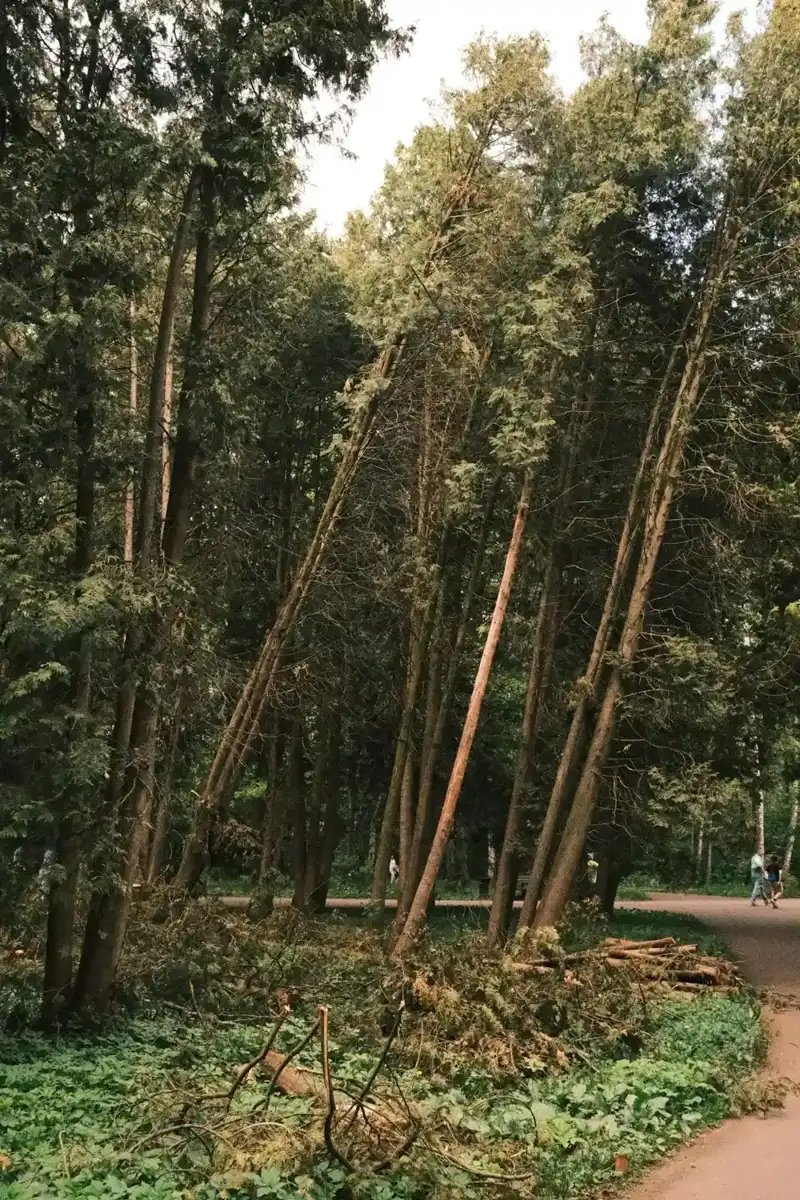
After a windstorm in Pomona, CA, check your trees in this order: look for downed or sagging power lines first and stay away from them, then look for hanging or broken limbs, cracks in trunks and branch unions, soil lifting at the base and new lean. Take photos of any damage before cleanup. Call SCE at 1-800-611-1911 for anything involving a line, the City at (909) 620-3759 for City street trees, and a tree service for private trees.
1. Lines first
Assume any downed or sagging line is live. Stay far away, keep kids and pets inside and call SCE or 911. Do not touch a tree that is touching a line.
2. Hanging limbs
Look up. Broken limbs caught in the canopy, sometimes called widowmakers, can fall without warning. Keep people out from under them.
3. Cracks and splits
Check the trunk and where large limbs join it. Fresh cracks, especially in V-shaped unions, can fail in the next wind.
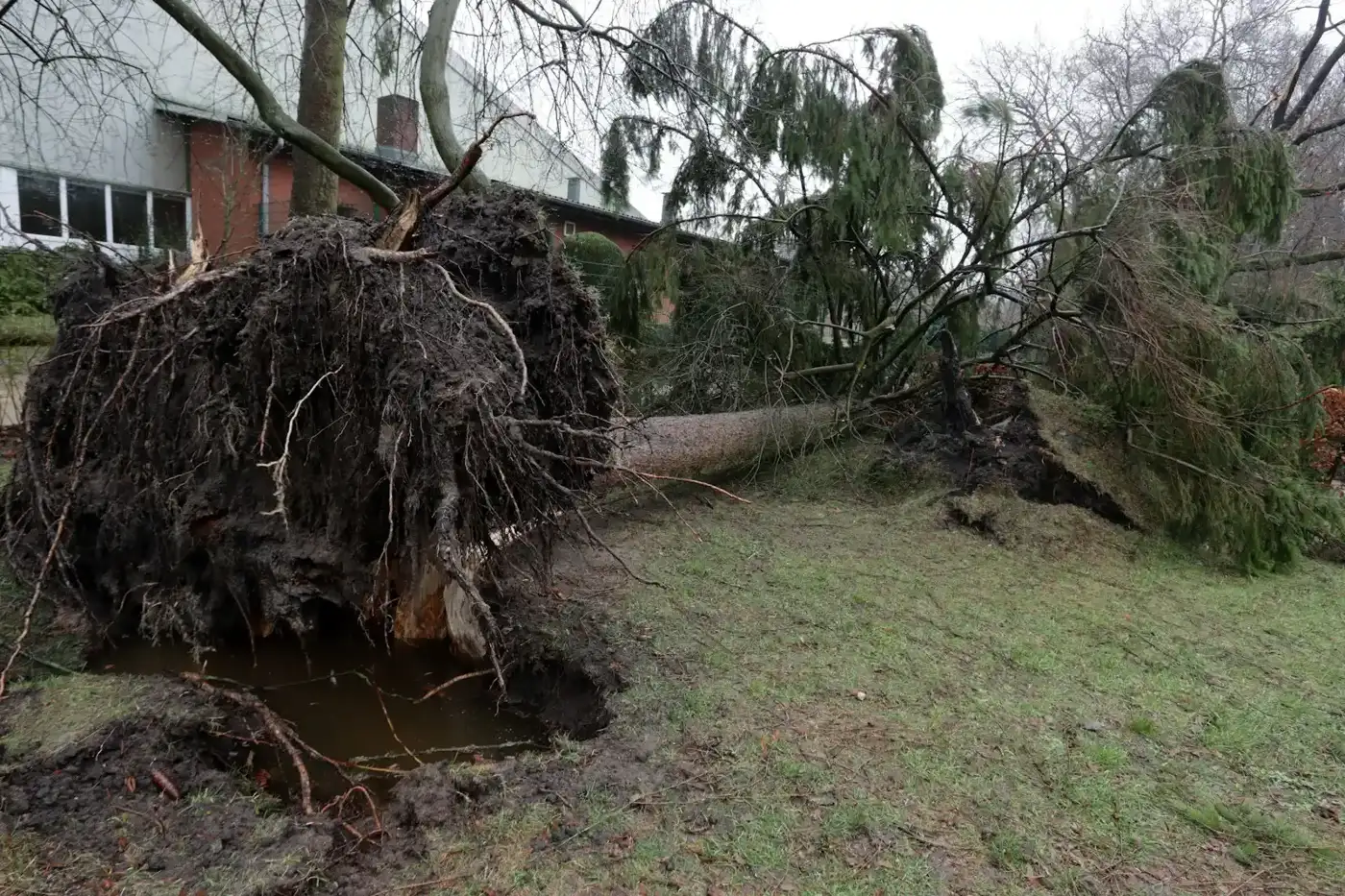
4. The base and roots
Look for soil lifting or cracking on one side of the tree, exposed roots or a new gap between the trunk and soil. Those are signs the root plate has moved.
5. Lean
Compare the tree's lean with photos from before the storm if you have them. A new lean, especially with lifted soil, is serious.
6. Roofs and gutters
Clear branches, leaves and bark from roofs and gutters. Dry debris is a fire hazard. See defensible space.
7. Palms
Check palms for broken fronds hanging in the crown. They can fall later.
8. Document
Take photos of damage before cleanup for your insurer.
9. Call the right people
- Lines: SCE, 1-800-611-1911.
- City street trees: Pomona, (909) 620-3759, or (909) 282-2835 after hours.
- Private trees: call us for storm damage at (909) 479-2666.
What not to do
- Do not cut a loaded trunk or limb yourself.
- Do not climb a damaged tree.
- Do not move limbs touching lines.
After cleanup
Have damaged trees checked once things settle. A tree health assessment helps decide what to keep. Storm damage service covers removal of fallen trees and limbs.
Before the next wind
Fall thinning, deadwood removal and lifting limbs off roofs lower the risk next time. See our pruning calendar.
10. Check your neighbors' trees too
A tree that fails often damages property next door. If you see a hanging limb or a cracked trunk on a neighbor's tree that leans over your yard, let them know. Calm, early conversation helps everyone. If the tree is a City street tree, report it to the City.
Insurance tips
Photograph damage from several angles before anything is moved, and keep receipts. Many policies help with removal of a tree that damaged a covered structure, but coverage varies, so check with your agent. A tree service can provide an itemized invoice and a written description of the damage.
Common wind failures in Pomona
- Eucalyptus limbs breaking at old wounds.
- Chinese elm and pepper splitting at tight unions.
- Dead pines snapping at the top.
- Shallow-rooted trees tipping in wet soil after rain.
- Palm fronds dropping from untrimmed crowns.
When to wait and when to act
Not every broken branch needs a crew the same day. A small limb in the lawn can wait for a calm day. A large limb hanging over a door, driveway or sidewalk, a tree leaning on the house, or a split trunk near a bedroom should be dealt with as soon as possible. If you are unsure, keep people away from the area and call. We can often tell from photos how urgent it is and what equipment is needed.
The National Weather Service Los Angeles office posts wind advisories. For palms, see our palm care guide.
Common questions
What should I check first after a windstorm?
Power lines. Look for downed or sagging lines and stay far away, then call SCE or 911. After that, look for hanging limbs, cracks, lifted soil at the base and new lean. Take photos before any cleanup, and call a tree service for private trees.
Is a tree with a new lean after wind dangerous?
It can be. A new lean, especially with soil lifting or cracking on the opposite side of the trunk, suggests the root plate has moved, and the tree may fall. Keep people and cars away and have it checked as soon as possible.