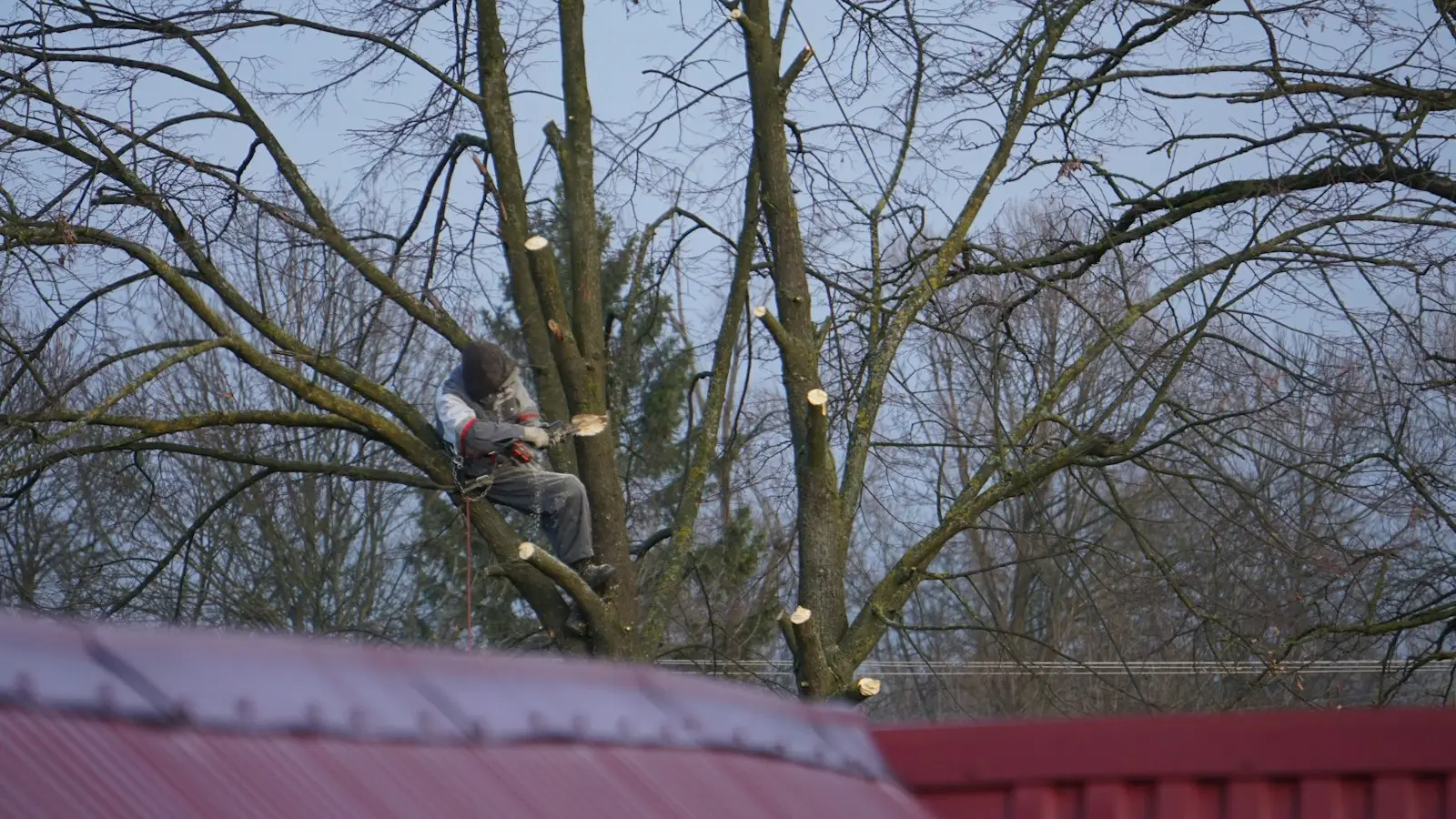
Tree trimming in Pomona, CA works best when it follows the tree's natural shape: thinning crowded limbs so wind can pass through, raising low branches over walks and driveways, removing dead wood, and shortening long limbs back to a healthy side branch. We follow ANSI A300 pruning practice and do not top trees, because topping leaves weak regrowth that breaks later. Call (909) 479-2666 and tell us what is bothering you about the tree.
The kinds of pruning we do
Good pruning starts with a goal for each tree. These are the cuts we use most:
- Crown thinning. Removing selected branches throughout the canopy to cut weight and let light and wind through. Usually no more than about a quarter of the live foliage in one visit.
- Crown raising. Lifting low limbs off roofs, driveways, sidewalks and play areas.
- Crown reduction. Shortening long, heavy limbs back to a strong lateral branch, which lowers height and spread without stubbing.
- Deadwood removal. Taking out dead, broken and hanging branches that can fall on people or property.
- Clearance pruning. Keeping limbs off the house, gutters, walls, solar panels and the neighbor's garage.
- Young-tree structural pruning. Choosing a strong central leader and spacing scaffold limbs so a young tree grows up sound.
Why we will not top your tree
Topping means cutting big limbs back to stubs to make a tree shorter. It looks tidy for a season. Then the tree pushes out dense shoots from each stub. Those shoots are weakly attached, the stub ends start to decay, and within a few seasons you have a taller, bushier, more dangerous tree than before. Crown reduction and thinning reach the same goal safely. If a tree is simply too big for its spot, removal and replanting is often the honest answer.
Pomona trees and how they like to be pruned
The older neighborhoods have trees that have been growing a long time, and many of them were trimmed poorly along the way. Here is how we approach the common ones:
- Camphor. Dense and heavy. Thinning and end-weight reduction keep the long limbs from cracking.
- Sycamore. Prune in winter. Remove crossing limbs and deadwood, and watch for anthracnose dieback in wet springs.
- Chinese elm. Fast growth and weak crotches. Regular thinning helps prevent splits in wind.
- Jacaranda. Prune right after the summer bloom. Avoid large cuts, which decay easily.
- Deodar cedar and pines. Light pruning only. Remove deadwood and lower limbs, but never strip the interior.
- Magnolia and oaks. Minimal, careful pruning. Oaks in nearby cities like Diamond Bar and Walnut can need a pruning permit.
- Fruit trees. Pruned in winter for shape and light. Citrus needs only light thinning.
Timing around heat, wind and nesting birds
Late fall through winter is the main pruning window for most shade trees in Pomona. Trees are dormant or slowed down, pests are less active, and there is less sap loss. Fall work also gets heavy limbs thinned before the Santa Ana winds come through the San Gabriel Valley.
From about February through August, birds nest in local trees. The federal Migratory Bird Treaty Act and California Fish and Game Code protect active nests, so during that season we look before we cut and leave active nests alone. That can mean waiting a few weeks on part of a tree. Hot summer days are hard on freshly pruned trees, so we keep summer pruning light. Our pruning calendar for Pomona breaks timing down by species.
Street trees and historic homes
If the tree is in the parkway between the sidewalk and the curb, it is probably a City street tree. Pomona requires a written permit before anyone trims, prunes or cuts one, and Public Works maintains City trees. Call the City at (909) 620-3759 about a street tree that needs attention. Owners in historic districts should also check the Pomona historic preservation guidance, because street trees and significant trees in those districts carry extra review. See our guide to historic district tree work.
Trimming near power lines
Pruning near overhead lines is specialized work. If any branch is within 10 feet of a line, call Southern California Edison at 1-800-611-1911 before anyone climbs. SCE clears its own lines. Once that is done, we can shape the rest of the tree. Read more in our power line guide.
What a trimming visit looks like
- Walk-through. We go over each tree with you and agree on what gets cut and why.
- Setup. Tarps and mats protect lawn, plants and paving below.
- Pruning. The climber works from the inside out, making clean cuts at the branch collar.
- Cleanup. Brush is chipped, leaves raked and walks blown off.
- Notes. You get a short note about anything we saw, such as decay, a weak union or a root issue, that should be watched.
Bundling trimming with other work
Pruning visits are a good time to deal with the rest of the list. Many customers add palm trimming, defensible space clearance on slopes, or a stump grind from an old removal. We price each item on the same estimate so you can pick what to do now and what to leave for later.
How often should trees be pruned?
It depends on species and age. Young trees benefit from structural pruning every couple of seasons while they set their shape. Mature shade trees often need thinning every three to five growing seasons. Fast growers like Chinese elm, ficus and eucalyptus may need attention more often. Palms are their own schedule, usually once a season. When we visit, we will tell you when the tree should be looked at again.
To get on the schedule, call (909) 479-2666 or send the form at the top of the page.
Common questions
How much of a tree should be trimmed at once?
As a rule, a healthy mature tree should not lose more than about a quarter of its live foliage in one visit, and often less. Taking too much at once stresses the tree, invites sunburn on the bark and triggers weak sprouts. If a tree needs more work than that, we spread it across two visits.
Can you make my tree shorter without topping it?
Often, yes. Crown reduction shortens the tallest and longest limbs back to strong side branches, which lowers height and spread while keeping a natural shape. It cannot shrink a tree dramatically in one go. If a tree is far too big for its spot, we will tell you that removal and replanting may be the better option.
Do I need a permit to trim my tree in Pomona?
A City street tree in the parkway or planting strip needs a written City permit before anyone trims it. Trees in historic districts can carry extra review. For a tree fully on your property, routine pruning usually is not a City matter, but check with Pomona Planning and your HOA if you are unsure.
Will trimming help my tree survive the wind?
Thinning and end-weight reduction lower the sail effect and the leverage on long limbs, which reduces the chance of breakage in Santa Ana winds. It does not make any tree storm-proof. Trees with serious decay, cracks or root problems need a closer look, and sometimes removal is the safer choice.