Defensible space tree work in Pomona, CA reduces the fuel that can carry fire to your house: dead fronds, dry brush, low limbs that act as ladders into the canopy, and branches hanging over the roof. We follow the zone approach published by CAL FIRE, working from the house outward. Whether a specific clearance is required at your address depends on your fire hazard zone and local rules, so check with the Los Angeles County Fire Department. Call (909) 479-2666 to talk through your lot.
Why it matters in Pomona
Most of Pomona is flat and built out, but the city edges against hills and open land, including the slopes around Phillips Ranch, the Ganesha Hills and the open space toward the 57 and 71 freeways. Santa Ana winds can carry embers a long way. Homes far from the brush line can still catch fire from embers landing in dry palm skirts, gutters full of leaves or a woodpile against the fence. Clearing those small things matters as much as clearing a slope.
The zones, from the house outward
CAL FIRE's defensible space guidance breaks the area around a home into zones:
- Zone 0, 0 to 5 feet. The ember-resistant zone. No dead plants, leaves or wood mulch against the house, and no branches over the roof.
- Zone 1, 5 to 30 feet. Lean, clean and green. Remove dead plants, keep trees pruned and spaced, and keep branches well away from the chimney.
- Zone 2, 30 to 100 feet. Reduce fuel. Cut grass low, space shrubs and trees, and remove ladder fuels below tree canopies.
Lot lines in Pomona often stop well short of 100 feet, so in practice we focus on the parts of each zone that fall on your property.
What we do
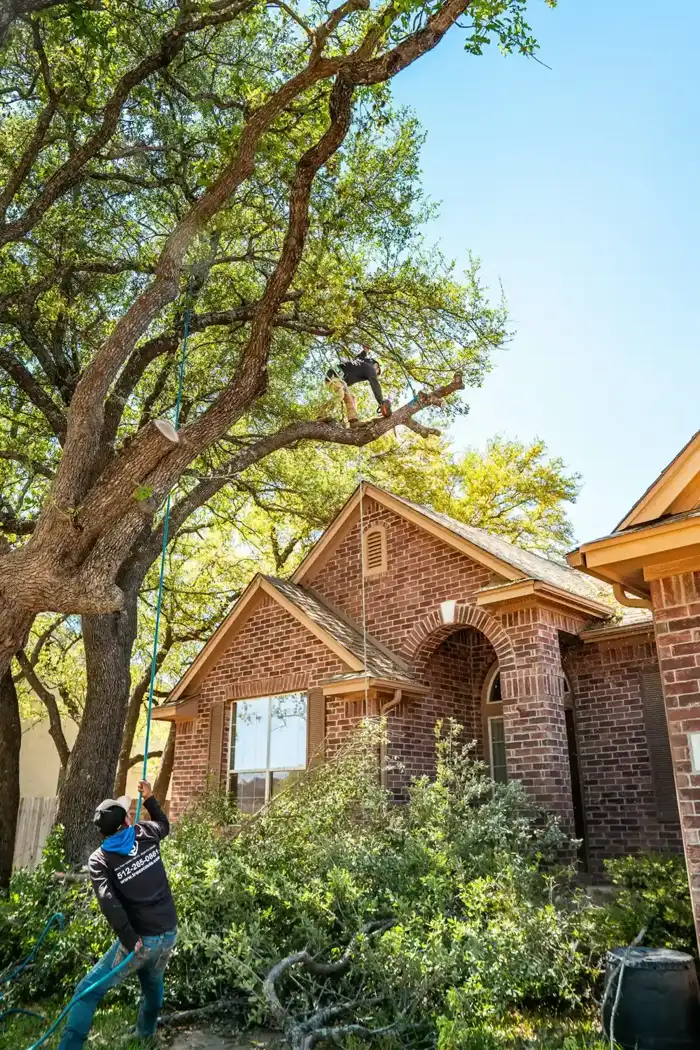
- Lift and clear limbs. Branches pruned away from the roof, chimney and walls.
- Remove ladder fuels. Low limbs and shrubs under trees taken out so fire cannot climb into the canopy.
- Clean palms. Dead frond skirts removed, one of the biggest ember traps on many lots. See palm trimming.
- Cut and haul brush. Dry grass, weeds and dead shrubs cut back, especially on slopes. See lot and brush clearing.
- Thin and space trees. Crowded trees thinned so crowns do not touch.
- Remove dead trees. Dead pines and eucalyptus near the house come out. See tree removal.
Species that burn easily
Some common landscape plants hold a lot of oil or dead material:
- Eucalyptus, which sheds bark strips and leaves that pile up and burn hot.
- Pines and junipers, with resinous needles and foliage.
- Untrimmed fan palms with a skirt of dead fronds.
- Rosemary and other dense shrubs against the house.
You do not have to remove all of these. Keeping them pruned, cleaned of dead material and spaced away from the house makes a big difference.
Slopes and erosion
On hillside lots, we cut brush low instead of pulling it out, leave chips in place to hold soil, and avoid stripping slopes bare before the rainy season. Fire safety and slope stability work together when the timing is right.
Protected trees and nesting birds
Oaks, walnuts and sycamores are protected in some nearby cities, including Diamond Bar, Walnut and Chino Hills. Fire clearance around those trees may still need a permit for larger cuts. From about February through August, birds nest in local trees and shrubs, and active nests are protected by law, so we look before we cut.
Check your fire hazard zone
The California Office of the State Fire Marshal publishes Fire Hazard Severity Zone maps that show where your home sits. The zone can affect building and clearance rules for your home. If you are not sure what applies at your address, ask the Los Angeles County Fire Department. We do the physical work and can provide photos and notes of what was cleared.
A yearly routine
Defensible space is maintenance, not a one-time job. A simple routine for most Pomona homes:
- Spring. Cut dry grass and weeds after the rains, and clean gutters.
- Late spring or summer. Trim palms and remove dead fronds.
- Fall. Thin trees and remove limbs over the roof before Santa Ana season.
- After every windstorm. Clear fallen leaves, bark and branches from roofs, gutters and walls.
Our after-windstorm checklist helps you check the yard after big wind.
What it costs
Defensible space work is priced by the amount of material to cut and haul, the number of trees to prune, and the slope and access. A small flat lot with a couple of palms and a tree over the roof is a short visit. A hillside lot with dense brush takes longer. We give you a written estimate with each item listed, so you can prioritize the work closest to the house first if the budget is limited.
Trees close to the house
Trees right next to a home are not automatically a problem. A healthy, well-watered shade tree with its lower limbs raised and its canopy kept back from the roof can actually shade the house and keep it cooler without adding much fire risk. What matters is dead material, branches over the roof and fuel underneath the tree. We look at each tree near the house and tell you whether it needs pruning, cleaning or, in some cases, removal. Call (909) 479-2666 to set up a visit.
Common questions
Is defensible space required for my Pomona home?
It depends on where your home is. The State Fire Marshal's fire hazard zone maps and local fire rules decide what applies at a given address. Check the maps and ask the Los Angeles County Fire Department if you are unsure. Even where it is not required, clearing dead material and limbs over the roof lowers your risk.
What is Zone 0?
Zone 0 is the first five feet around your home, called the ember-resistant zone. The goal is to keep anything that can catch an ember away from the walls: dead leaves, wood mulch, dry plants and branches over the roof. It is often the easiest zone to fix and one of the most important.
Do I need to remove all my trees for fire safety?
No. Healthy, well-spaced, well-pruned trees can stay. The goal is to remove dead material, cut ladder fuels under trees, keep limbs off the roof and give space between crowns. Removing dead or declining trees near the house is usually the most useful step, along with cleaning palm skirts.